
You can see Mont Blanc in a day. But how long does it take to get to know the Aosta Valley?
Travel is not only a matter of distance. Sometimes it is a matter of what someone helps us discover.

I imagine an American traveller arriving in Italy for the first time.
They have just a few days, a list of places they have dreamed of for years and a wish to return home feeling they have missed nothing.
Rome, Venice, Mont Blanc.
Three names, three photographs, three memories to take home.
There is nothing wrong with that. When I travel, I too want to see the places I have heard so much about.
But I wonder what would happen if, on arriving at the foot of Mont Blanc, someone told them that this mountain is more than a view.
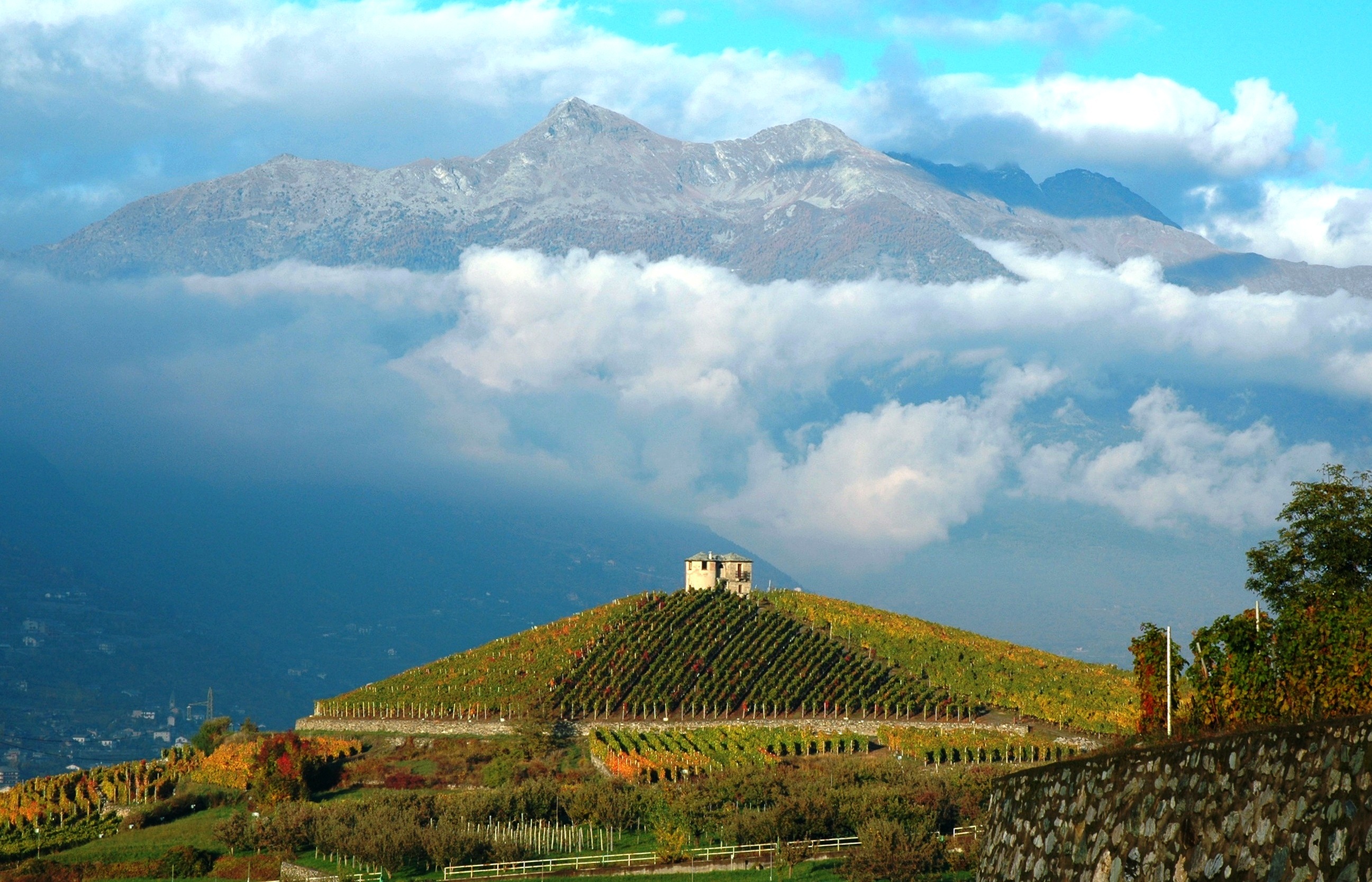
That nearby there are people tending vineyards on difficult slopes, villages holding surprising stories, producers who have chosen to stay, roads that can be travelled slowly and places whose appearance changes with every season.
And what if, instead of telling them what they absolutely must see, we asked what they would like to experience?
Perhaps we would discover that time is not what stops them staying.
They have not yet found a reason to do so.
The same place, different journeys
I sometimes think about how the meaning of a journey can change depending on where we start.
For someone from the Aosta Valley, a winery a few kilometres from home may be somewhere they have passed for years without ever stopping.
For someone from Piedmont or Lombardy, that same winery could become the reason for a different kind of weekend.
For visitors from Sardinia, Switzerland or Germany, the Aosta Valley can offer an encounter with landscapes, traditions and ways of life worth exploring further.
For someone crossing the ocean, Mont Blanc might be the first reason to come. But not necessarily the most important thing to remember.
Of course, our passport does not decide how we travel. Two people from the same city may want completely different experiences.
That is precisely the point: we cannot tell everyone the same story about a place, or expect everyone to experience it at the same pace.
The value of what we had not planned
Our strongest memories of a journey do not always coincide with its most famous landmarks.
Sometimes they are a conversation, a road taken out of curiosity, someone met by chance.
I imagine a visitor who comes to see Mont Blanc and discovers they could spend the following day in a vineyard, the next at a castle, then follow a cycle route, visit a craft workshop or explore a small village they had never heard of.
We are not simply adding activities to their itinerary.
We are offering them another way to connect with the place.
And perhaps, just when they stop rushing from one stop to the next, the journey really begins.
Why connections matter so much to me
Over the years I have worked in different areas: buildings, energy, environmental management, mobility, businesses and services.
As time goes by, I increasingly see that many opportunities arise where these worlds meet.
An electric bicycle can make a route possible for someone who would not otherwise attempt it.
A charging system can make a stop easier, but it does not create an experience on its own.
An accessible service can allow someone to take part in something from which they would otherwise have been excluded.
A winery can be a destination. Connected to other businesses and places, it can become part of a much broader story.
That is why, when I think about slow tourism, I do not simply think about moving more slowly.
I think about the ability to choose, to stop, to meet people and discover places without having to follow the same route every time.
And I also think about those who face obstacles when travelling today: not only architectural barriers, but difficulties with connections, information, services and the organisation of experiences.
An Aosta Valley to enjoy all year round
We often talk about reducing seasonality.
But I do not think it is enough to invite people to come in a different month from usual.
We need to ask what they will be able to do when they arrive, whom they will meet, how they will get around, which activities will be open and which experiences will actually be available.
A place to enjoy 365 days a year does not emerge from a slogan.
It comes from people and businesses able to work together, reliable services, sensible connections and offers that change with the seasons.
And it should not only be about people arriving from far away.
I would like people who live in the Aosta Valley to find new reasons to get to know places they already consider familiar.
What if we started telling its story differently?
Let's return to our American traveller.
Perhaps they will still want to see Rome, Venice and Mont Blanc in three days.
Or someone might spark enough curiosity to make them change their plans.
They might not stay a week. Perhaps they will stay one more night. Or decide to return.
We cannot know.
But we can do something: stop talking only about what we have and start telling people what they can experience.
Mont Blanc will remain magnificent even in a photograph taken in just a few minutes.
The Aosta Valley, though, has many other stories.
And some of them need time to be heard.